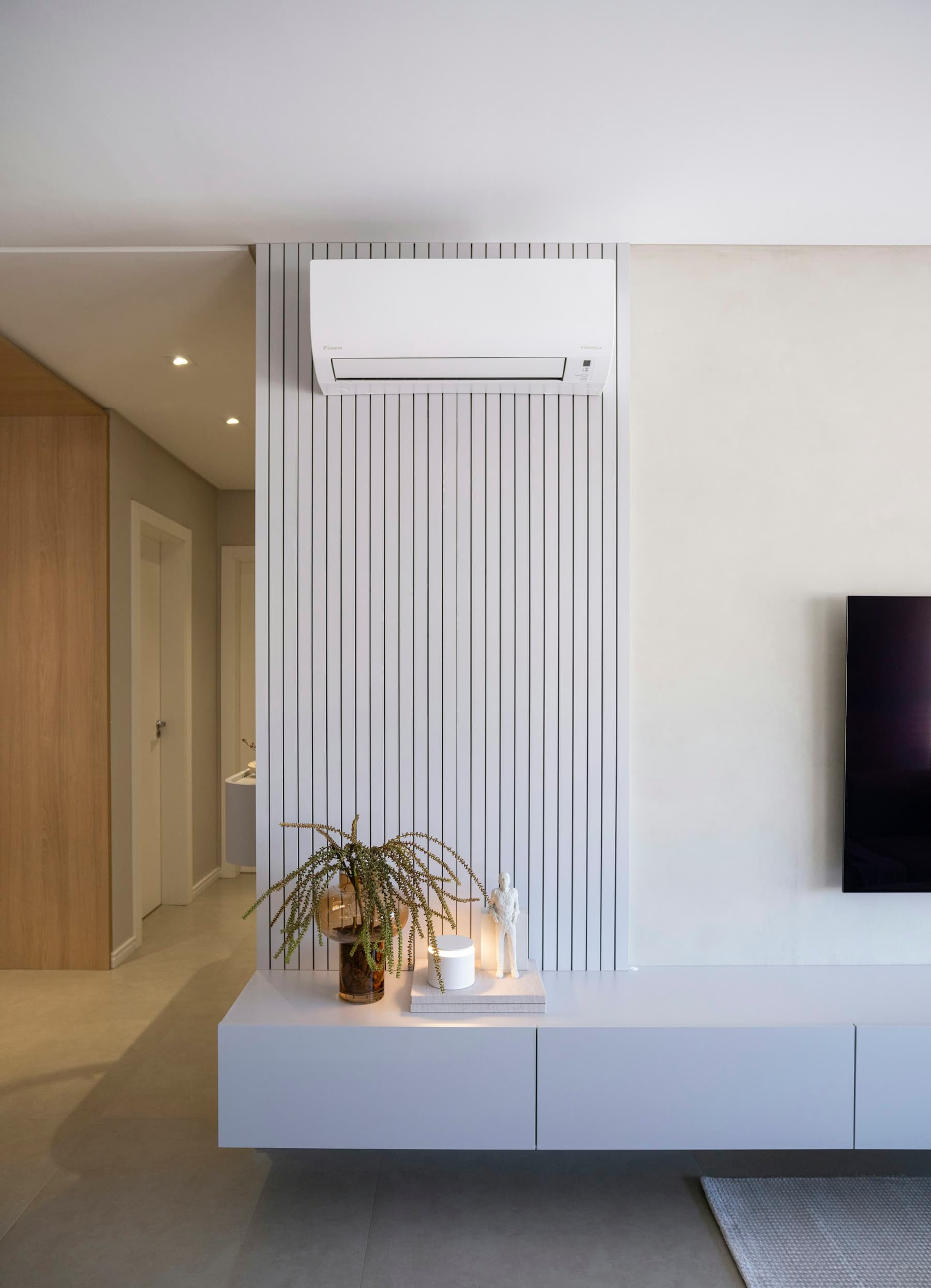
Single split, multi split, power, where to put the units, cleaning the filters: what to look at before installing airco at home, and how to keep it efficient.
Hot summers are becoming more frequent, and in top-floor flats or sunny Brussels houses, it is sometimes hotter inside than out. Airco is no longer a luxury for offices. But a badly chosen or badly placed unit is noisy, uses a lot of energy and cools poorly. Here is what to look at before you decide.
Single split, multi split or portable
A portable air conditioner, with its hose out of the window, helps out for one room and a few days. It is noisy, not very efficient and the half-open window lets the heat in. For regular use, a fixed system is far more comfortable.
- A single split connects one outdoor unit to a single indoor unit. It is the simplest solution for a bedroom or living room.
- A multi split connects one outdoor unit to several indoor units, to cool several rooms without adding more units on the front of the building.
- Most recent models are reversible: they can also heat in spring and autumn, which takes some load off the boiler.
Power: not too much, not too little
An undersized unit runs non-stop without ever reaching the set temperature. An oversized unit keeps starting and stopping, which wears out the compressor and leaves a feeling of cold, damp air. The right power depends on the floor area, but also on the ceiling height, the insulation, which way the room faces, the size of the windows and how many people use the room. That is why a visit on site is essential before choosing a model.
Where to put the units
The indoor unit goes high up, on a wall that lets the air flow through the whole room, without blowing straight onto a bed or sofa. The outdoor unit must be accessible for servicing, well ventilated, and mounted on brackets that limit vibration.
In Brussels, an outdoor unit on a street-facing front or on a visible roof may need a permit, and a building's co-owners often have a say in what is fixed to shared walls. Check with your municipality and your property manager before the work. Think of your neighbours too: a unit placed right under a neighbour's bedroom window can quickly become a source of conflict.
The installation
A proper installation includes drilling the wall, running the refrigerant lines and the condensate drain, the electrical connection, vacuuming the circuit and a leak test. Handling refrigerants is regulated and must be done by a certified technician. One more reason to be wary of do-it-yourself kits.
At Chauffanet, we first come and see your home, talk with you about which rooms to cool and where to place the units, then draw up a detailed offer. The amount announced is the amount you will pay.
Servicing your airco
A neglected airco cools less well, uses more energy and can spread unpleasant smells. Part of the upkeep is up to you.
- Clean the indoor unit's filters regularly during the season of use: a gentle vacuum or a rinse in lukewarm water is enough, then let them dry before putting them back.
- Keep the outdoor unit clear of leaves, plants and objects placed in front of it.
- Check that the condensate drain is not dripping where it should not.
- Have the unit checked by a professional before the hot season: full clean, circuit check, disinfection of the indoor heat exchanger.
An airco service or repair visit is charged at 60 € per hour, with a call-out fee of 50 € in Brussels and 60 € in the surrounding area.
Thinking about airco, or yours no longer cools like it used to? Call Chauffanet on 0488 80 07 20 or message us on WhatsApp. We answer within two minutes, and the price is announced before the job.
Want an opinion on your installation?
A technician picks up within 2 minutes. The price is always given before any job.